



On a hot summer afternoon in the 1990s, returning from a sweat-drenched day of childhood activities, I bounced through the doors of our townhouse smelling like “outside”. Instead of being greeted with a popsicle or told to go wash my hands, I found the entire household silent and somber.
Our family had just received the news that my uncle Sandy, the gentle man who taught me how to appreciate and dance to Baltimore Club, had been arrested. He was in his early twenties, fresh out of a tour in the military.
This was over 30 years ago, and he has remained locked up ever since that day. And for more than 30 years, the state has determined exactly what he eats. Imagine three decades of prison food. What does that do to a person’s body, mind, and actual path toward rehabilitation?
This experience is not an anomaly. Half of Americans have a family member who has been, or currently is jailed, imprisoned, or incarcerated. When you consider the broader carceral system, including immigrant detentions and juvenile detention institutions, you quickly clock how many people are indirectly affected by and have an emotional stake in what is fed to system-impacted people.
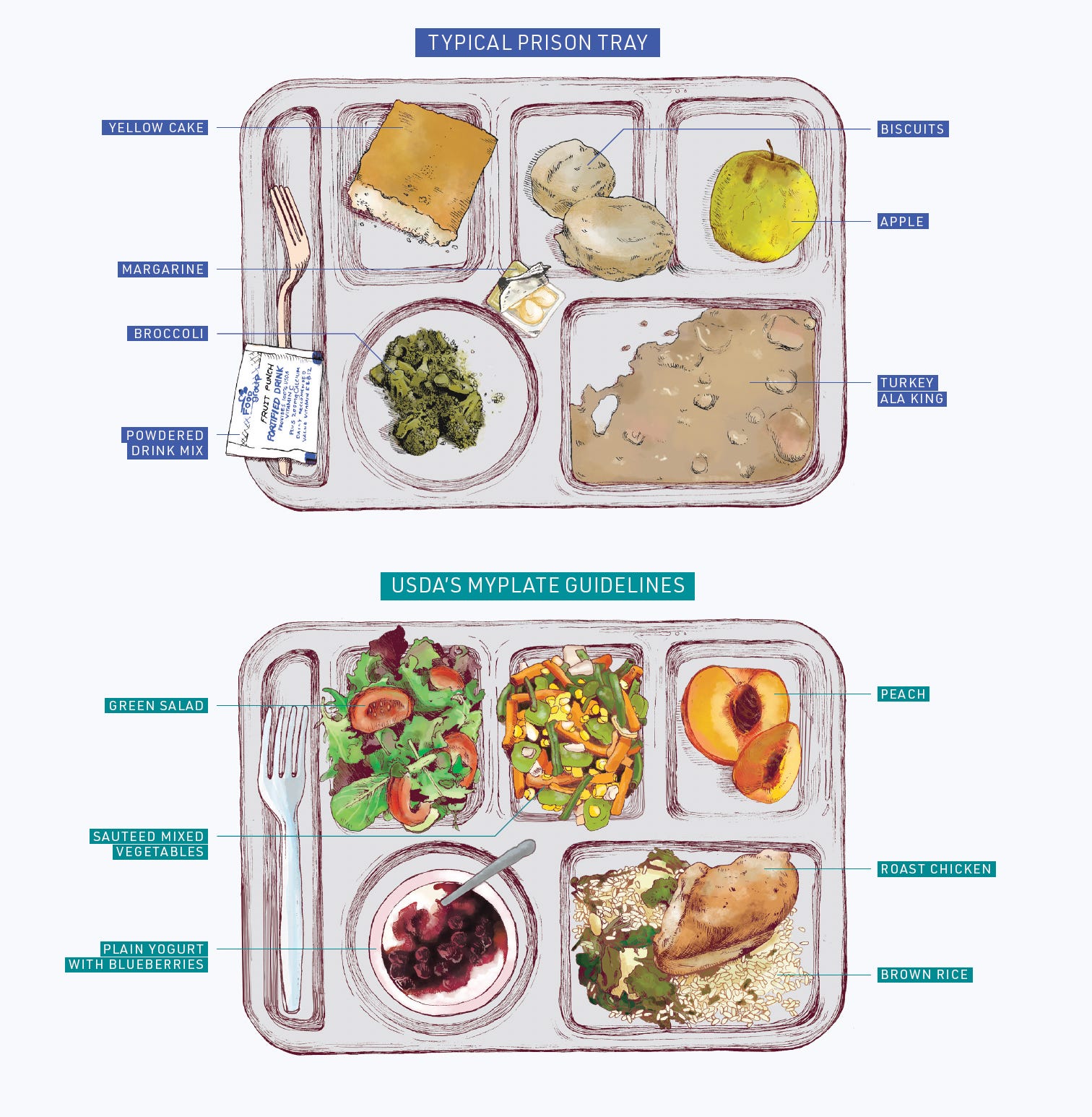
The meals that state governments provide to incarcerated people are often unsafe. I’m talking about contaminated meals, food with maggots, spoiled milk, and expired products. When it’s not outright nasty, it’s nutritionally inadequate and made up of empty carbs.
It’s widely known that food without nutrients like fiber or protein can lead to behavioral and mental health issues in children, but similarly in adults. And then environmentalists will tell you that even the sheer volume of inedible prison food creates literal tons of waste. Another silent crisis in itself. To me of course, it’s all explicitly linked. Food justice inside prisons is directly tied to the food systems outside of them. The less we care about food in prisons, the less we care about food in schools, and our agricultural institutions. The U.S. is already seeing evidence of rampant disease, parasites and too many recalls to count in the livestock, meat and even salad and leafy green food industries.
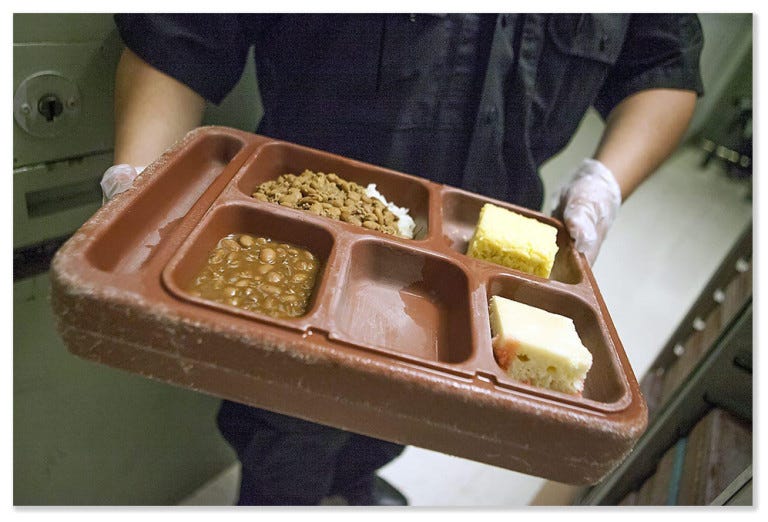
According to a research report by Impact Justice, more than half of the formerly incarcerated people surveyed said they rarely or never had access to fresh vegetables or fruit while incarcerated. The research drew on hundreds of surveys of formerly incarcerated individuals, their families, and corrections staff across the country. Originally put together as a report, the work’s gravity expanded into a book when The New Press commissioned and published it. The book and its authors; Leslie Soble, Alex Busansky and Dr. Aishatu R. Yusuf recently won the 2026 James Beard Media Award for Food Issues and Advocacy.
What does food mean when the person eating it has no control over what is served, when it is served, or where it comes from? And what happens when something as ordinary as a pear becomes something a person hasn’t tasted in eighteen years? I sat down for a phone call with Dr. Aishatu R. Yusuf, Vice President of Innovation Programs at Impact Justice and co-author of Eating Behind Bars: Ending the Hidden Punishment of Food in Prison.

The Interview —
TASTE BUD: Explain Impact Justice’s approach to navigating the carceral system, in your own words.
Dr. Aishatu R. Yusuf: We work within the criminal justice realm, which is a very old and antiquated system. “Innovation” and “criminal justice” are rarely words you see in the same sentence, but our organization makes sure to meld them together to help people think differently. We split our work into a few buckets. The first consists of frontend projects aimed at understanding the population and keeping people out of the system entirely. The second addresses what happens when people do go into the system. We firmly believe that when someone enters the carceral system, you don’t just throw away the key. Ninety percent of incarcerated people eventually get out. So we do a lot of work on the inside, which naturally connects to our work on the reentry side, addressing basic needs like housing and development.
TB: Your work seems like an ecosystem with everything from putting vertical farms in prisons to undertaking the effects of food on menopausal incarcerated bodies. How did focusing on food become the connective tissue that leads you into all these other distinct areas?
Dr. Yusuf: In almost every industry, there’s a complaint about silos. You work over there, I work over here, and there’s very little connective tissue. But because we get to ideate-to-scale problems, we think differently about creating those threads. The menopause program is a great example. Our food work put us in a lot of spaces to talk about the physical experience of prisons and the need for fresh, healthy food. Because we were in those rooms, we happened to overhear a conversation about a woman who wanted to get menopause policies into rule for disenfranchised areas. We asked her, “Have you thought about a prison?” There is no more disenfranchised area than a prison. Through our food work, we already had a network to understand the missing pieces when it comes to institutional limits, but also the distinct needs of specific populations. So I talked to our food team and asked, “How do we get the conversation around food and menopause to meld together? What are the specific foods we should be thinking about to support menopausal women?” The organization is meant to operate as a healthy organism; when a piece is missing, we bridge the silo.
TB: As a food writer, I’m nosy and curious about what food means to you personally or even culturally. Does that connect you to the work of feeding folks on the inside?
Dr. Yusuf: I am a vegetarian, so I clearly eat a lot of vegetables. I’m also Nigerian, so I’m a rice eater type of individual [Laughs]. My whole life is centered around fresh vegetables that come out of the ground and onto my plate. This is a privilege and something that should be available to everyone. Everyone should have access to butter lettuce, everyone should have romaine, right? What ties me to this work too is when I think about how every day I eat a salad and vegetable, I’m thinking about the fact that so many people who are incarcerated, so many of them do not have access to literally what fuels my entire body. Through our work in the Growing Justice project, we build containerized, vertical farms inside semi-trucks to grow green leafy vegetables for prisons. The beautiful thing about these hydroponic containers is that they’re weather agnostic, meaning they can go anywhere and be built anywhere—as long as we have the money and the technology to do so.
Instead of having to hire professionals to grow the food, we thought, why don’t we have the professionals teach the incarcerated people how to grow the food for themselves. Now we have women in prisons in South Carolina and California who have an entire skillset of growing food inside of a containerized farm. They now have access to healthy and fresh food and now they have an opportunity to work. All of this came from the book.
TB: I think many people might push back and question whether people who committed heinous crimes deserve to eat well. I of course immediately think about non-violent crimes: drug offenses, self defense convictions, and the 4-6% of people in the prison who are innocent. How do you address this in your work? Are violent offenders or those who commit the worst of the worst allowed to eat with dignity?
Dr. Yusuf: I really appreciate the question. We get a lot of that. People will ask, “Why should I care? There are kids who aren’t being fed?” I answer the question in the way that you asked the question, in that we’re dealing with human beings that are deserving of dignity and humanity. Clearly I have opinions on the conversation around accountability [for incarcerated individuals] and their punishment generally speaking. I’m an accountability person, not a punishment person. Their legal punishment is the incarceration. Their punishment is being removed from society and their families. Their punishment is living inside a cell and losing autonomy over their physical body. That’s their punishment. Their punishment is not to be structurally stripped of their health. Their punishment is not to be forced to eat food that induces hypertension, diabetes, and systemic diseases.
“Their punishment is living inside a cell, losing autonomy over their physical body. Their punishment is not to be structurally stripped of their health.” — Dr. Aishatu Yusuf
When a facility is run by the state, the state is legally responsible for that individual’s survival. So the conversation surrounding ‘deserving’ and ‘not deserving’ is actually one that I never get into. I think we can all agree that every human on this planet is deserving of eating food, and every human on this planet is deserving of the possibility of having healthy food, particularly the folks that the prison is responsible for.
TB: I’ve lived in Mexico for quarter of my life. Still, I embarrassingly don’t know enough about the prison system here. What are some other countries showing us proof of concept for better food conditions in prisons?
I’m going to answer with a caveat. So, the carceral system in the United States was an outcome of slavery. Period. The prison system was literally created in a way to keep the enslaved population in servitude. That’s literally how the prison state system came to be. You cannot separate that from the United States and other countries along the transatlantic slave trade routes. The countries that are doing better in their prisons typically have a more homogeneous population, one that is all similar, and they typically have less disenfranchisement, less stratification as wealth in their countries. I think it’s really important to hold that knowledge as sound because some of the countries that are doing much better are places like Finland. Norway is another country that does really well by that. In terns of the juvenile system, New Zealand does well by that. New Zealand similarly in terms of demographic, there’s a lot of Māori people that end up in their prison. But new Zealand has done a lot surrounding changing their system. We often take trips to see what other countries do. We are an imagination organization, to help people imagine the difference, imagine what can be different so they can come back to see policy change and that work.
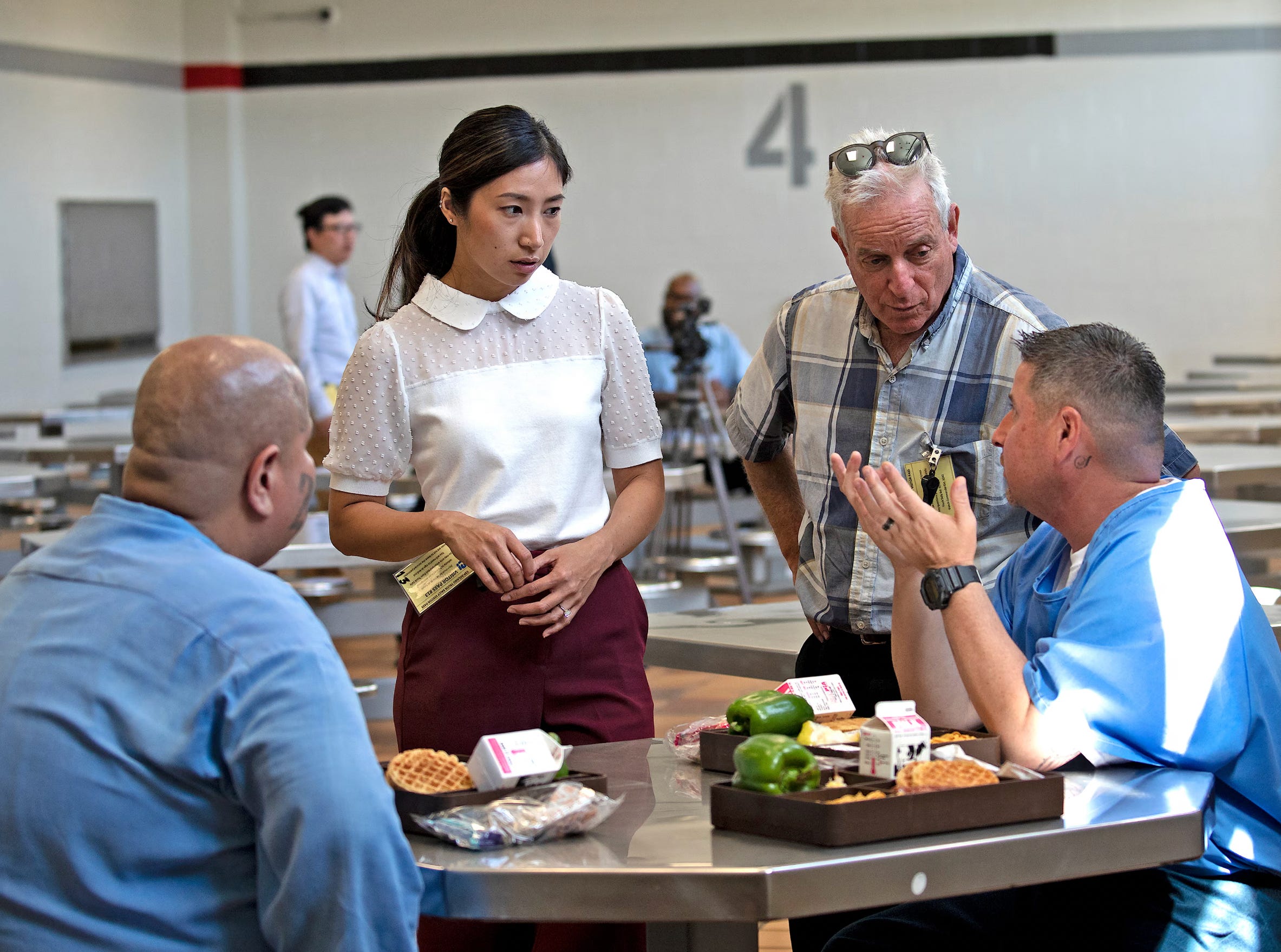
TB: What’s often missing in reporting about dire themes of our times are solutions. So what is the pathway forward? How can people can be involved and help impact justice and the work you do move forward?
Dr. Yusuf: As an organization, we stand on the mantra of “do something.” No, not everyone has the opportunity to speak before Congress, or talk to the federal court, or to build a new program. But everyone can do something. Read the report. Read the book. Share it with a friend. Ask your family members whether they know someone impacted by incarceration. The more people understand how connected they are to the system, the more they begin to care about changing it.
If food justice isn’t your entry point, maybe menopause justice is. Maybe housing is. Maybe workforce development is. Find the thing that connects to you and engage there.
We’re also building a vertical farm inside our California office that will eventually be open to the public, where people can see the work firsthand and meet system-impacted people involved in growing food.
This interview has been edited for clarity and length. But to read through the full report, buy ‘Eating Behind Bars: Ending the Hidden Punishment of Food in Prison’, donate, or learn more about the work, visit impactjustice.org or follow their food advocacy work @impactjustice.
It's pretty interesting when you think about it. Incarcerated people are the invisible skeleton crews that uphold a lot of the infrastructure of our society. Probably more than we know. Aren't they out here putting out wildfires? And they don't deserve to be nutritionally supported?
Thank you for sharing!